Narratives shape cities,cities shape futures.
Liberated from the "floor area constraint,"
cities evolve from hardware to experience (UX).
Exploring the Core of Narrative DesignA Six-Part Story
Experience the paradigm shift in urban development.
Liberation from theFloor Area Constraint
Traditional urban development focused solely on maximizing floor area and selling or renting at higher prices. This episode explores the old paradigm of the "floor area constraint."
Three Elements of the Conventional Model
Current real estate business has no business model other than creating large amounts of "floor space" and selling or renting it at high prices.
Urban development is designed within a biased system where value is calculated only in terms of physical space called "floor," such as receiving floor area ratio bonuses for community contribution.
Economics-Driven Design
Design by Economics
Prioritizing economic rationality and efficiency, fixed schemes centered on floor area. (The floor area constraint)
Maximizing floor area ratio and rental space
Top-down planning by government and experts
Disconnect from resident needs and homogenization
Static Planning Verification
Static Data & Visualization
Designers add value to developers' plans through design. Planning based on static statistical data.
Static macro data such as land prices and population
Waterfall approach (planning → construction)
Quality of experience unknown until after construction
Placemaking
Placemaking & Operation
Designing usage and lifestyle for completed hardware. Single-use by purpose and centralized management.
Providing and managing hardware (buildings)
Tenant attraction and rental income model
Centralized operation by management companies
From Hardware to UX
Reimagining cities not as mere physical boxes, but as UX (experience) for those who live there. What is the new design thinking that begins with N=1 narratives?
Three Elements of Narrative-Driven Development
Narrative Design
Design by Narrative
From the economic rationality of "floor area" to the empathy of "narrative."
Shift to narrative and empathy
Discovering narratives through research and workshops
Building personas and storylines
AI Digital Twin
Urban Rehearsal (Simulation)
Dynamic verification of experience through urban "rehearsal."
Micro behavioral data such as emotions, choices, and movement patterns
Simulation using UE5, ABM, and brainwave measurement
Risk mitigation through "experience verification" before construction
Narrative Business
Ecosystem & DAO
Maximizing hub value and creating a co-creative ecosystem.
Fusion of Place-making and Mind-making
Building startup ecosystems
Autonomous decentralized community operation through DAO
Liberate Cities from the Floor Area Constraint
We break through existing urban development models (economic rationality, static planning, single-use) and
propose new value creation processes through narrative, simulation, and co-creation.
Start with "Narrative"
Design by Narrative
Narrative DesignWorkshop
Starting with persona development, through AI simulation, and ultimately creating not design drawings but a 15-minute short film. Introducing the specific process.
Narrative Design
Workshop
We create narratives and design the future of cities through a 16-step process
Hover over a step to
view detailed information
CONCEPT MOVIE
A 15-minute short film changes everything.
AI Digital TwinSimulation
Based on narrative sources discovered in workshops, we conduct verification experiments using digital twins on the digital twin platform.
System Architecture
How 3D Digital Twin Works
We AI-ize the city's "personality" and future resident profiles, allowing them to live in a digital twin space. This enables scientific verification of "living city behavior" such as human flow and gathering points.
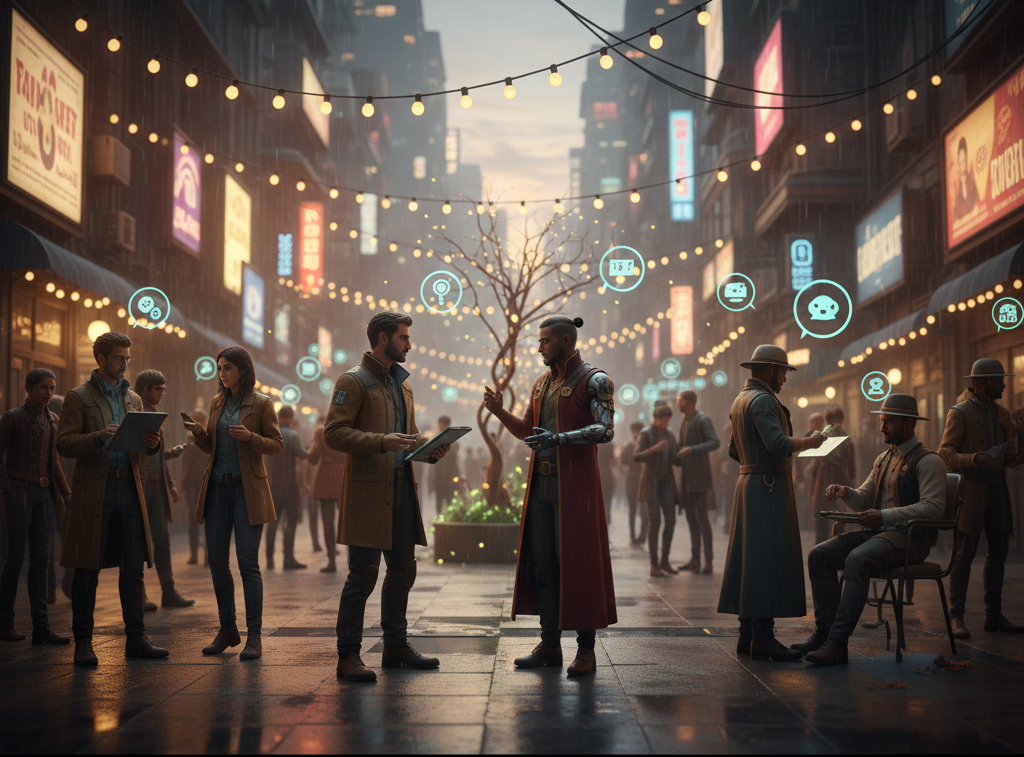
High-Precision Personality AI
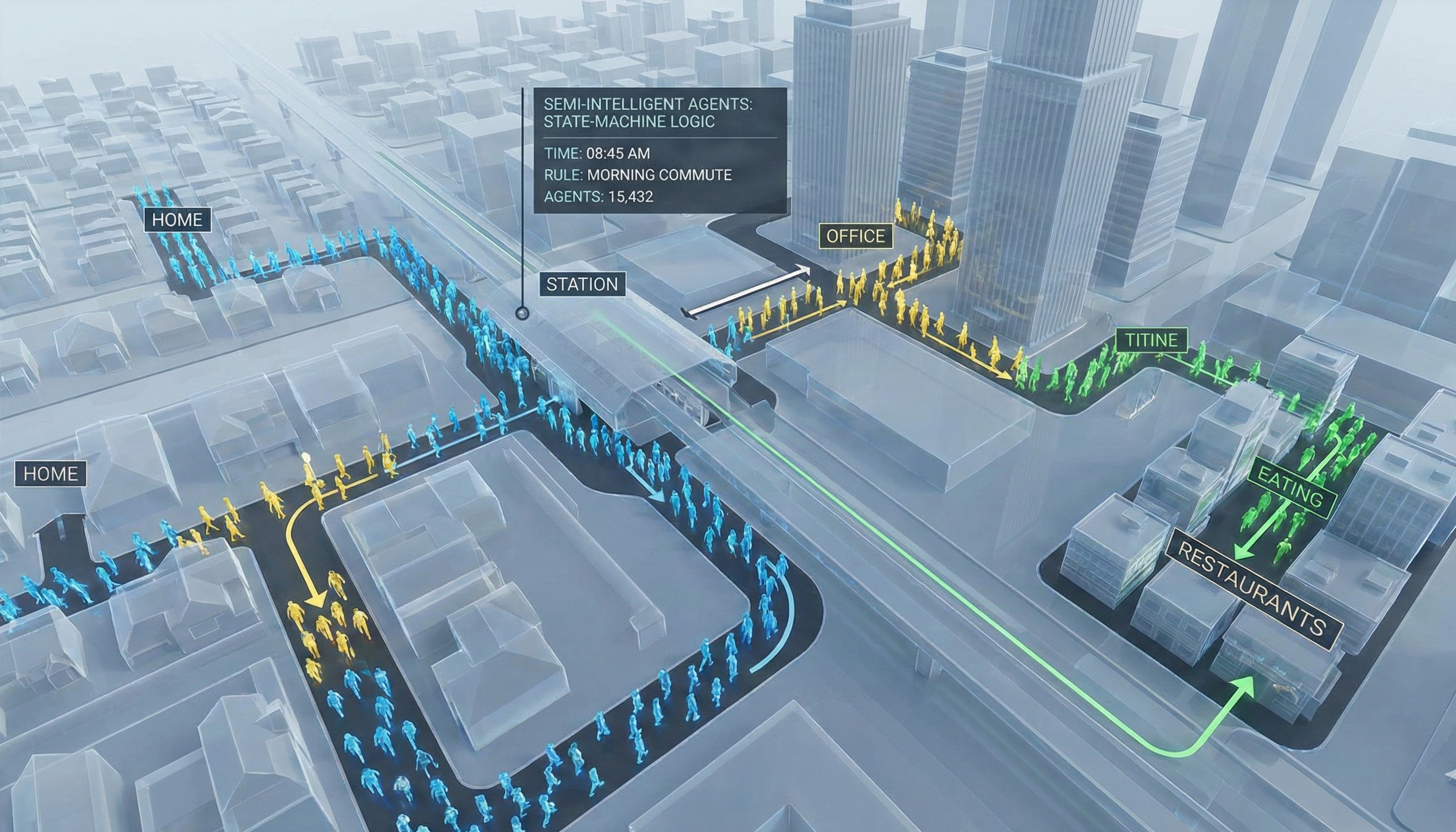
Lightweight AI
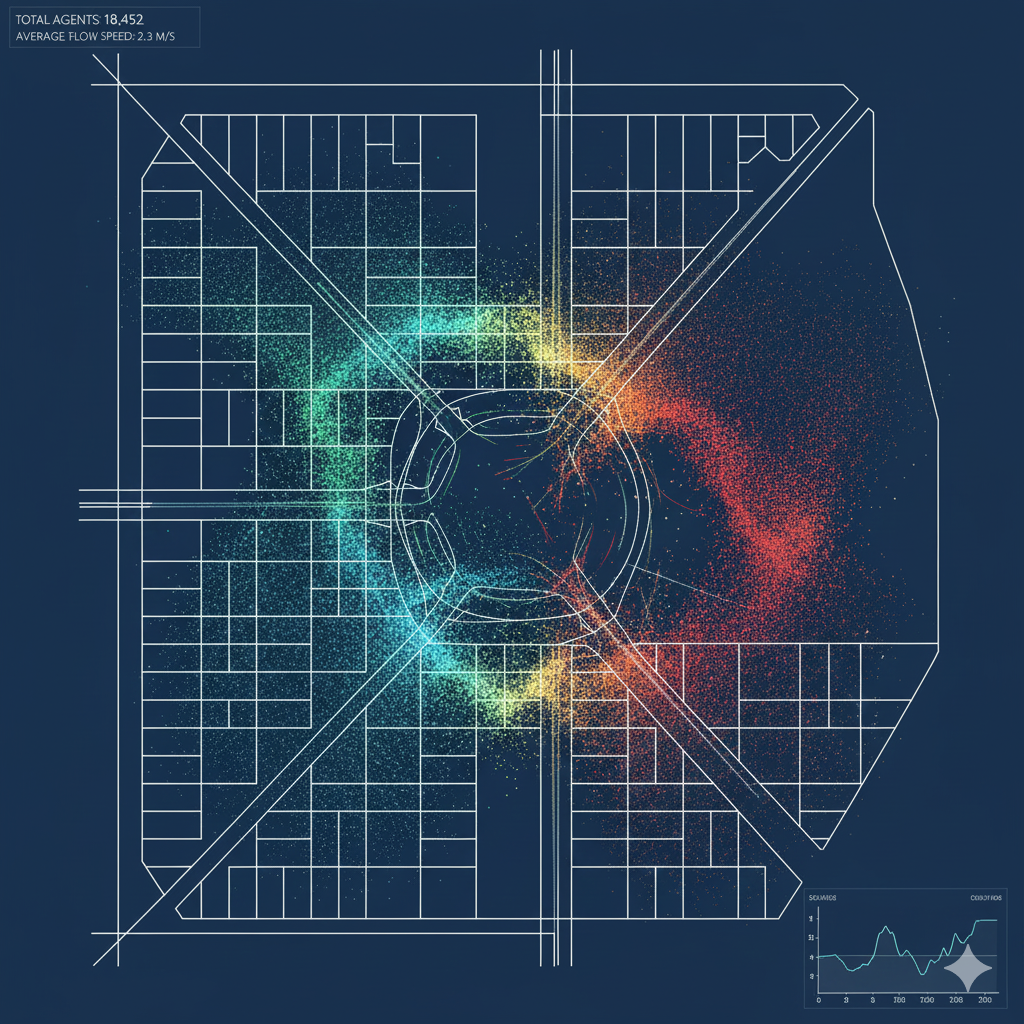
Crowd Simulation
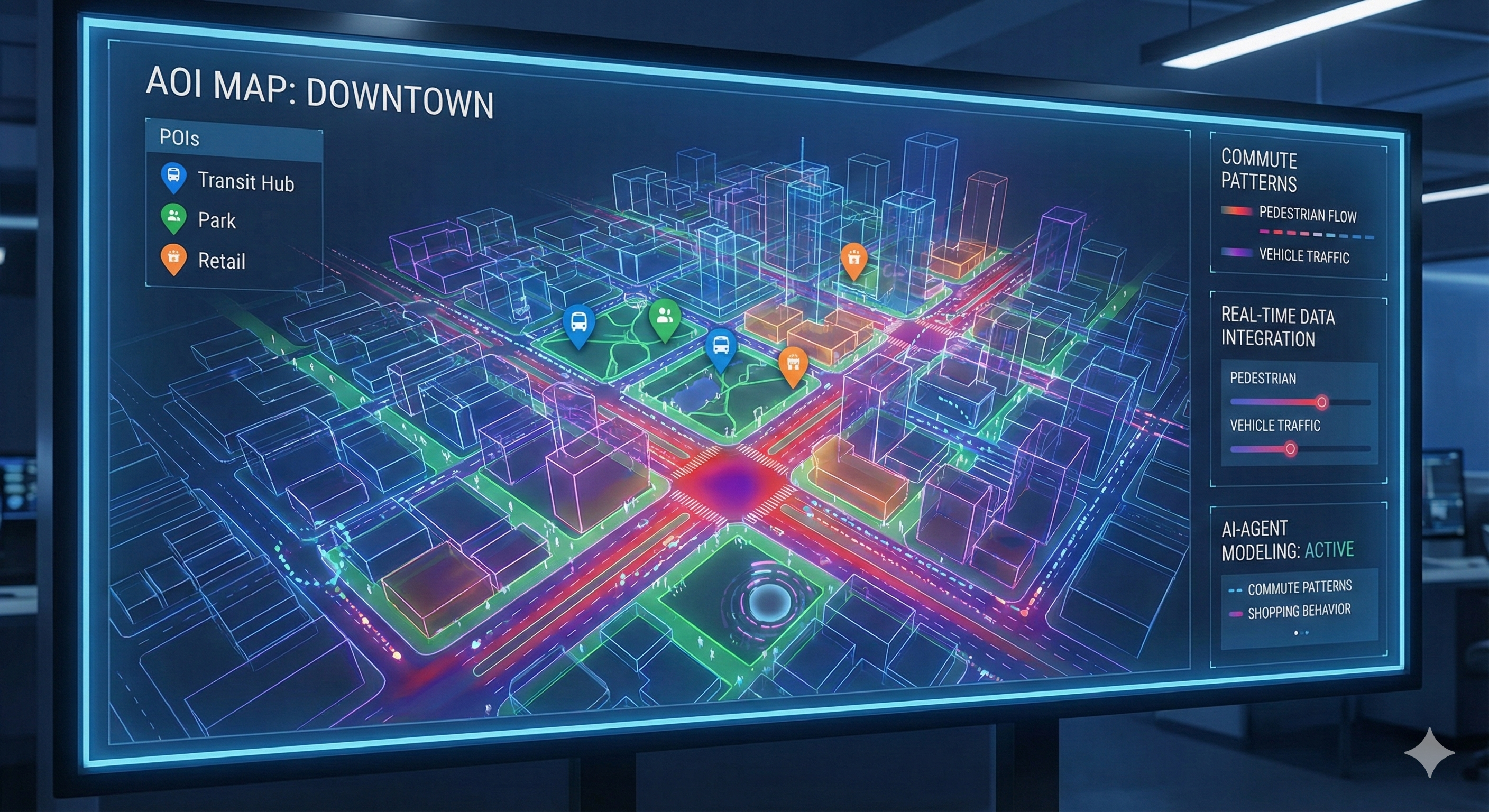
Base Information (AOI/POI)

Narrative Environment
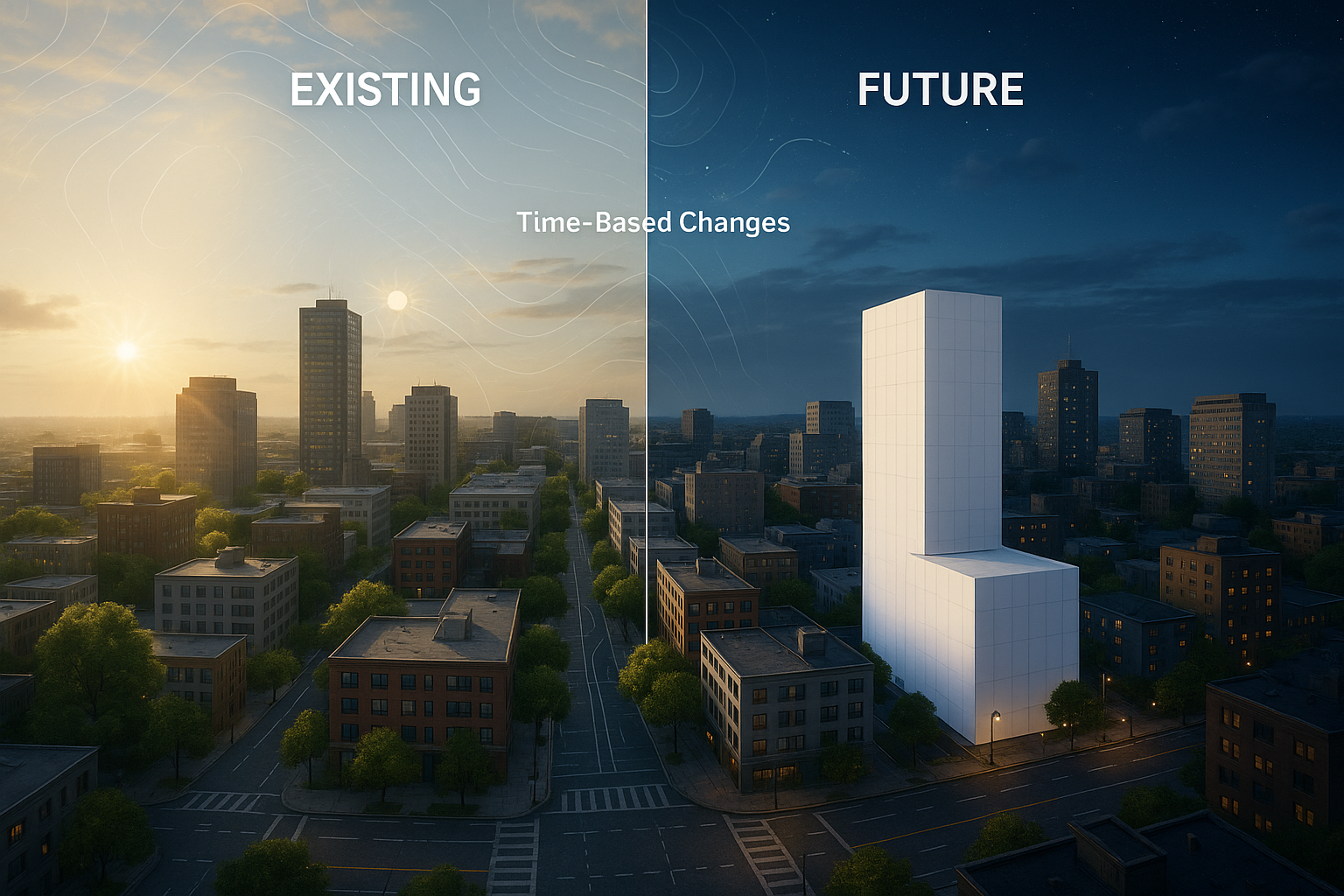
Comparison & Analysis
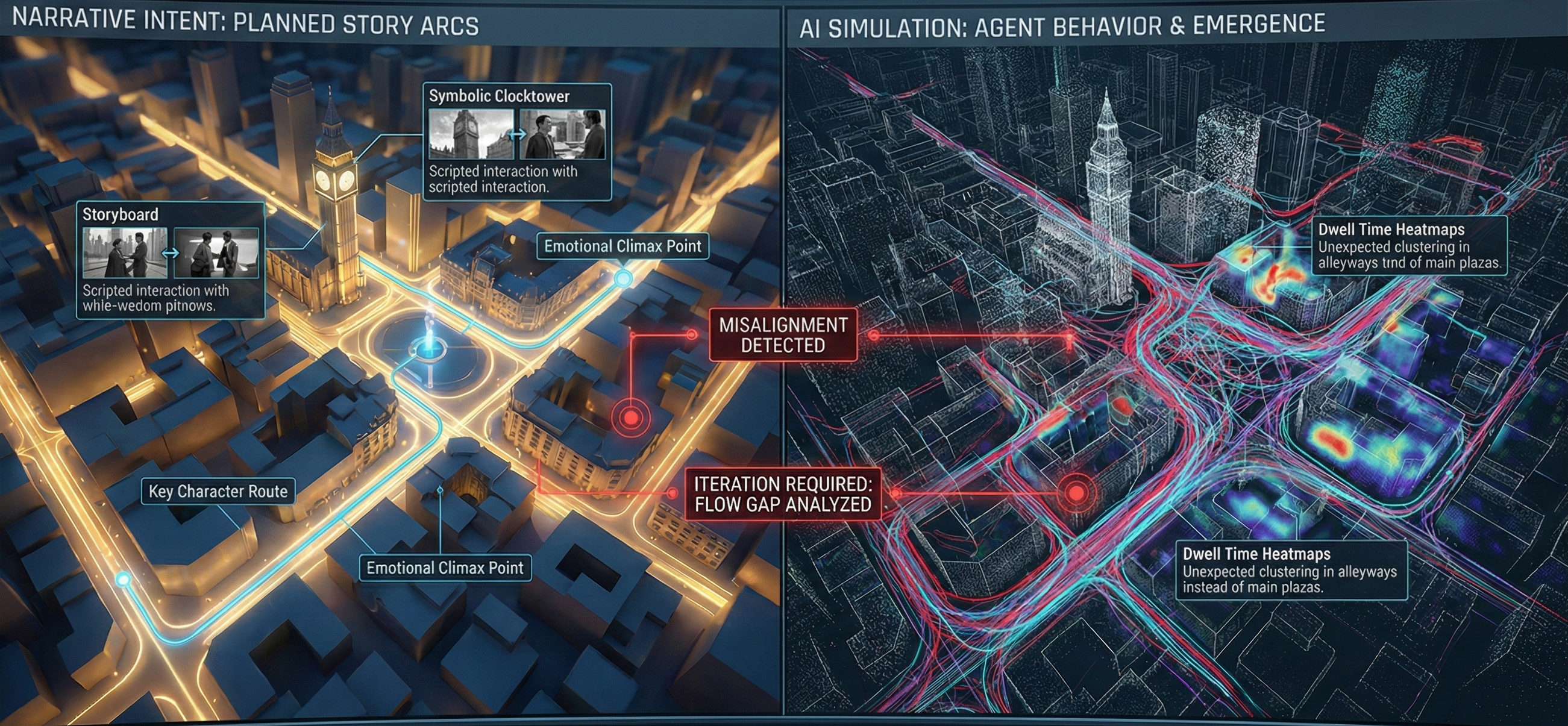
Tuning
New Value and Monetization
Not just rental income. Events, content, subscriptions. The diverse revenue sources created by narratives and evolution to Real Experience.
Design by Narrative as Investment
By viewing cities as UX, we achieve diverse revenue points beyond the conventional "rental model" and sustainable asset value appreciation.
📈 Long-term Asset Value Trends
Conventional Model (Aging Deterioration) vs Narrative Model (Aging Enhancement)
*These figures are for illustration purposes only.
💰 Revenue Portfolio Comparison
Breaking Away from the Single-Legged "Floor Rental" Approach
*These figures are for illustration purposes only.
Future Construction:Construction to Creation
From the era of building cities to the era of creating narratives. Urban design will move people's hearts, just like writing a film script.
"Real Estate" to"Real Experience"
All planning begins with depicting the real stories of the people who live there.
inspiring dots inc.
NEW YORK
"Real Estate" to "Real Experience"
We are a creative company that advocates bottom-up urban design starting from N=1 narratives.